
Medicare costs consist of premiums, deductibles, coinsurance, and out-of-pocket expenses that vary significantly by plan type. Families supporting a senior through Medicare decisions face a real financial planning challenge. The 2026 Medicare and You Handbook sets the standard Part B premium at $202.90 per month, and that is just one piece of a larger picture. Understanding Medicare expenses across Parts A, B, C, and D, plus supplemental options like Medigap, gives families the foundation to make confident, cost-aware decisions for their loved ones.
What are the basic Medicare costs families should understand?
Medicare is divided into four parts, and each carries its own cost structure. Knowing the difference between them prevents expensive surprises.
Part A covers hospital stays. Most people pay no monthly premium for Part A if they or their spouse worked at least 40 quarters and paid Medicare taxes. However, the Part A deductible applies per benefit period, not per year. Coinsurance kicks in after 60 days in the hospital, and costs rise sharply the longer a stay continues.

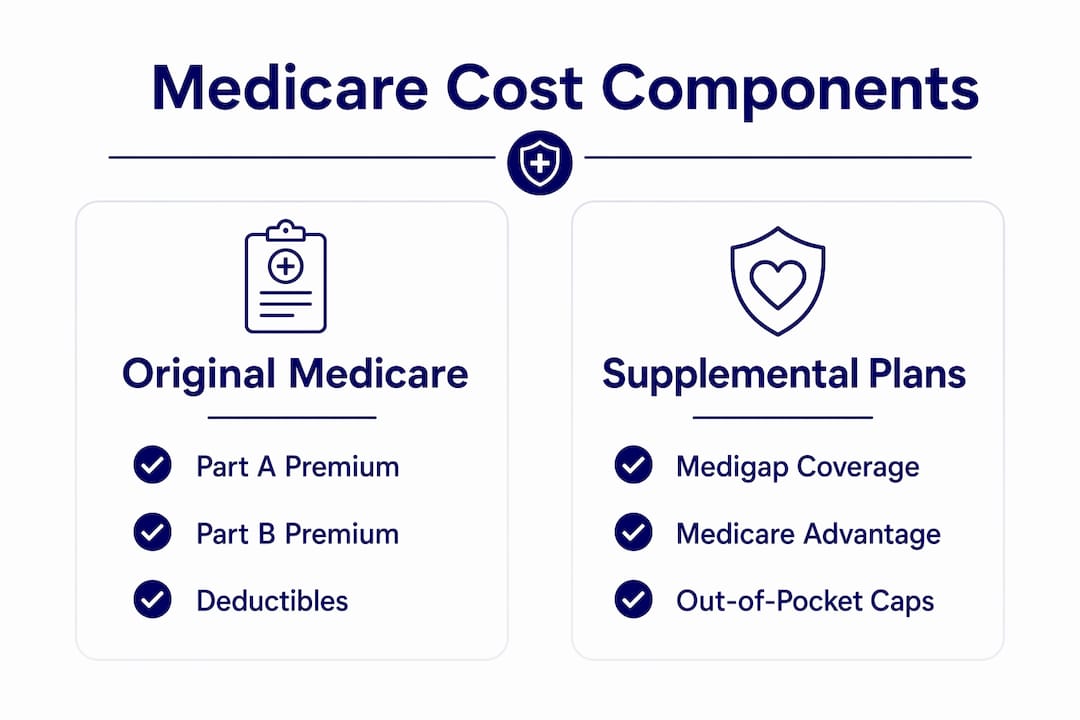
Part B covers outpatient care, doctor visits, and preventive services. The 2026 standard premium is $202.90 per month, with a $283 annual deductible. After the deductible, Medicare pays 80% and the beneficiary pays 20% with no cap. Higher-income individuals pay more through the Income-Related Monthly Adjustment Amount, or IRMAA, which is calculated from 2024 tax returns.
| Medicare Part | Monthly Premium | Deductible | Coinsurance |
|---|---|---|---|
| Part A | $0 for most | Per benefit period | 20% after day 60 |
| Part B | $202.90 standard | $283/year | 20% of approved costs |
| Part D | Varies by plan | Varies by plan | Tiered by drug type |
| Part C (Advantage) | Often $0 extra | Varies by plan | Varies; has OOP max |
Part D covers prescription drugs. Premiums, deductibles, and cost-sharing vary by plan and formulary. Families should compare drug formularies carefully before enrollment, since the same medication can cost very differently across plans.
Medicare Advantage (Part C) bundles Parts A, B, and often D into one plan. The 2026 in-network out-of-pocket maximum is $9,250, with a combined in-and-out-of-network limit of $13,900. The average in-network limit sits around $5,421. That cap is a meaningful protection that Original Medicare does not provide.
Pro Tip: Original Medicare has no annual out-of-pocket maximum. A single major illness or surgery can generate unlimited cost exposure without a supplemental plan in place.
How do Medicare expenses affect long-term family financial planning?
The cumulative cost of Medicare over a retirement is one of the most underestimated numbers in senior financial planning. A 65-year-old couple may need approximately $405,000 in savings to have a 90% chance of covering retirement health care costs, including Medicare premiums and out-of-pocket expenses. That figure rises with heavier prescription drug use and increased health care needs over time.
Gender also affects the math. Women face roughly 15% higher retirement health care costs than men, largely because of longer life expectancy and extended years of premium payments. Families with aging mothers or grandmothers should factor this into their planning.
Medicare also leaves significant coverage gaps that families often overlook:
- Dental care is not covered under Original Medicare. Routine cleanings, fillings, and dentures come entirely out of pocket.
- Vision care is excluded. Eyeglasses and routine eye exams are not covered benefits.
- Hearing aids are not covered. Devices can cost thousands of dollars per pair.
- Long-term custodial care is not a Medicare benefit. Nursing home stays beyond skilled care are a separate, major expense.
These gaps can add thousands of dollars per year to a senior’s actual health care costs. Families who build a retirement budget around the Medicare premium alone will find themselves caught off guard when these bills arrive.
Pro Tip: When budgeting for a senior’s retirement health care, add a separate line item for dental, vision, and hearing. These costs are predictable and recurring, and they belong in every Medicare financial plan.
What enrollment pitfalls raise Medicare costs for families?
Enrollment timing is one of the most costly mistakes families make when supporting a senior through Medicare. The rules are strict, and the penalties are permanent.
-
Part B is not optional for most people. Many families assume that because Part A is often premium-free, Part B can be skipped or delayed. That assumption is wrong. Failing to enroll in Part B on time triggers a lifelong penalty of 10% added to the premium for every 12-month period of delayed enrollment without creditable coverage. A two-year delay means a 20% permanent increase in monthly premiums.
-
Original Medicare has no spending cap. Without a supplemental plan, a senior with Original Medicare faces unlimited out-of-pocket exposure. A serious illness, extended hospital stay, or cancer treatment can generate costs that quickly exceed what most families can absorb.
-
Medigap enrollment windows are narrow. The best time to buy a Medicare Supplement plan is during the six-month Medigap Open Enrollment Period that starts when a beneficiary is both 65 and enrolled in Part B. During this window, Medigap plans cannot deny coverage or charge more based on health status. After this window closes, insurers can use medical underwriting, which can result in higher premiums or outright denial.
-
Medicare Advantage networks can be restrictive. Advantage plans often limit coverage to specific provider networks. A senior who travels frequently or splits time between Florida and another state may find that their preferred doctors are out of network, leading to higher costs or denied claims.
How can families optimize costs with supplemental Medicare plans?
Supplemental coverage is the most effective tool families have to control Medicare expenses over the long term. Two main options exist: Medigap and Medicare Advantage.
| Feature | Medigap | Medicare Advantage |
|---|---|---|
| Out-of-pocket cap | No set cap; plans cover most gaps | Yes, capped at $9,250 in-network (2026) |
| Provider flexibility | Any provider accepting Medicare | Network-restricted in most plans |
| Extra benefits | Generally none | Often includes dental, vision, hearing |
| Monthly premium | Higher | Often $0 beyond Part B premium |
| Underwriting after enrollment | Yes, in most states | No underwriting required |
Medigap plans, such as Plan G and Plan N, cover the costs that Original Medicare leaves behind. Plan G covers nearly all out-of-pocket costs after the Part B deductible. Plan N covers similar expenses but requires small copays for some office visits. Both plans provide predictable monthly costs, which makes budgeting far easier for families.
Medicare Advantage plans bundle coverage and often include dental, vision, and hearing benefits that Original Medicare excludes. The trade-off is a restricted provider network and prior authorization requirements for some services. Families whose senior has established relationships with specific specialists should verify those providers are in-network before switching.
Choosing between Medigap and Medicare Advantage depends on the senior’s health needs, travel habits, and financial priorities. A senior who values provider freedom and predictable costs benefits most from Medigap. A senior who wants extra benefits and a lower monthly premium may prefer Advantage.
Pro Tip: Review your senior’s Medicare plan every year during the Annual Enrollment Period, which runs from october 15 through december 7. Plan costs and benefits change annually, and a better option may be available.
Key Takeaways
Understanding Medicare costs requires knowing all four parts, the gaps in Original Medicare, and the role of supplemental coverage in protecting a family’s finances.
| Point | Details |
|---|---|
| Part B is mandatory | Delaying Part B enrollment triggers a permanent 10% penalty per year without creditable coverage. |
| Original Medicare has no spending cap | Without a Medigap or Advantage plan, out-of-pocket costs are unlimited after a major health event. |
| Retirement health costs are substantial | A 65-year-old couple may need $405,000 to cover Medicare-related costs through retirement. |
| Dental, vision, and hearing are not covered | These recurring expenses must be budgeted separately or covered through a Medicare Advantage plan. |
| Medigap enrollment timing matters | The six-month open enrollment window after turning 65 is the only guaranteed access period without underwriting. |
What I’ve learned helping families navigate Medicare costs
After working with hundreds of seniors and their families in Southwest Florida, one pattern stands out clearly. Families who start planning early, before their loved one turns 65, consistently avoid the most expensive mistakes. Those who wait until a health event forces the issue often face penalties, coverage gaps, or limited options.
The most common misunderstanding I see is the belief that Medicare is essentially free. Part A may be premium-free for most people, but Part B, Part D, and any supplemental coverage all carry real monthly costs. Add dental, vision, and hearing expenses, and the annual total surprises nearly every family I meet.
My honest advice is to treat Medicare as a financial planning event, not just a health care enrollment. Review options annually. Understand what each plan covers and what it does not. And do not wait until a health crisis to ask whether the coverage is adequate. The families who prepare tend to age with far less financial stress, and their seniors receive better care because the coverage is in place when it is needed most.
— Alston
How Xactinsure supports families managing Medicare costs
Sorting through Medicare plan options is genuinely complex, and the stakes are high. Xactinsure specializes in Medicare plans for Southwest Florida families, working with multiple carriers to compare options without bias.

Whether your senior is approaching 65 or already enrolled and wondering if their coverage is right, Xactinsure offers free, no-obligation consultations to review the full picture. The team covers Medigap Plan G, Plan N, Medicare Advantage, and ancillary options like final expense coverage. Families in Fort Myers, Cape Coral, Naples, and surrounding counties can schedule a consultation to get clear answers and a plan that fits their senior’s needs and budget.
FAQ
What is the standard Medicare Part B premium in 2026?
The standard monthly premium for Medicare Part B in 2026 is $202.90, with a $283 annual deductible. Higher-income beneficiaries pay more through IRMAA surcharges based on their 2024 income.
Does Medicare cover dental, vision, and hearing?
Original Medicare does not cover routine dental, vision, or hearing care. Some Medicare Advantage plans include these benefits, but coverage levels and provider networks vary by plan.
What happens if you miss the Medicare Part B enrollment deadline?
Missing the Part B enrollment deadline without creditable employer coverage triggers a permanent penalty of 10% added to the monthly premium for each full 12-month period of delay.
What is the difference between Medigap and Medicare Advantage?
Medigap supplements Original Medicare by covering most out-of-pocket costs, with access to any Medicare-accepting provider. Medicare Advantage replaces Original Medicare with a bundled plan that includes an out-of-pocket cap and often extra benefits, but uses a restricted provider network.
How much should a family budget for a senior’s Medicare costs in retirement?
A 65-year-old couple may need approximately $405,000 to cover Medicare premiums and out-of-pocket health care costs through retirement. That estimate grows with prescription drug use and does not include dental, vision, or hearing expenses.
Recommended
- Medicare Changes 2025 - Drug Prices & Coverage Updates
- Insurance Articles & Guides - XactInsure Blog
- Medicare Insurance Plans & Guidance - XactInsure
- Medicare Insurance Plans Southwest Florida
Get a Free Professional Insurance Review
Our licensed Southwest Florida specialists serve Lee, Collier, and Charlotte counties with local, family-first protection advice.
Request Free Consultation →